NYC Film Critic


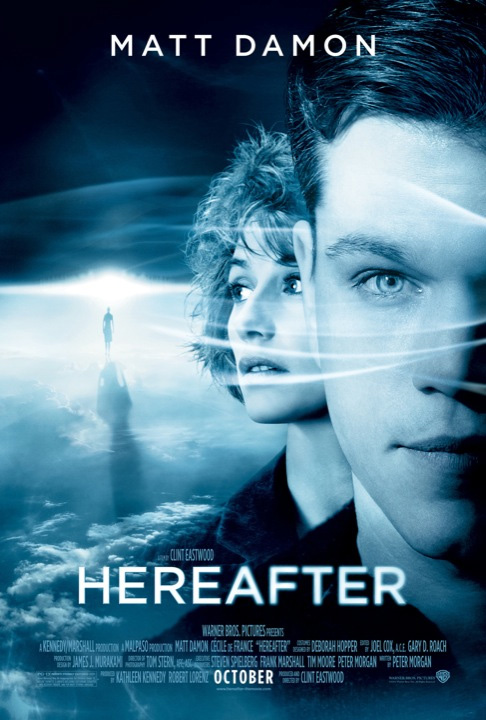
Hereafter
Directed by Clint Eastwood
Written by Peter Morgan
Starring Matt Damon, Cecile De France, Bryce Dallas Howard, Frankie McLaren, George McLaren
**

At some point in their career, almost every filmmaker feels the urge to explore issues of mortality and what exactly happens after we die.

(more…)


Closing out coverage of the 48th New York Film Festival with a final batch of capsules.  Look for longer reviews of three more movies–Mike Leigh’s Another Year, Julie Taymor’s The Tempest and Clint Eastwood’s Hereafter–closer to their theatrical release dates in December.

(more…)

Boxing Gym
Directed by Frederick Wiseman
***1/2

In a year dominated by documentaries that play more like fiction—think Catfish and I’m Still Here—thank goodness we still have Frederick Wiseman around to show us how old-school cinema verite is done.  A titan in the documentary world (in influence if not necessarily box office), Wiseman has been making observational portraits of American life and institutions since the late 1960s, with movies like High School, Public Housing and Domestic Violence.  His latest, Boxing Gym, is one of his less weighty films—at least when compared to something like Domestic Violence and its sequel—but it’s still a terrific example of his aesthetic.  For several months, Wiseman and his camera crew set up shop at an Austin, Texas-based boxing gym and documented the facility’s daily workings, filming sparring sessions, individual workouts, off-the-cuff, shoot-the-shit kind-of conversations and even registration sessions where the gym’s owner and chief trainer signs up new members.  As is typical in a Wiseman film, there’s no narration, no lower-third ID’s telling us a person’s name, no outside information beyond what we see on the screen.  The style is so different from contemporary documentaries—to say nothing of reality television—it can be difficult to adjust to at first.  But as the film goes on, you find yourself falling into the rhythm of this gym, recognizing faces and growing familiar with the surroundings.  It helps that the gym itself is such a visually interesting place.  This ain’t a ritzy Crunch or New York Sports Club facility, it’s a small, grungy, lived-in space with memorabilia lining the walls and well-used equipment covering every bare bit of floor.  In other words, it’s a serious place and the cliental take their workouts seriously, but never to the point where they can’t share a laugh with or lend a hand to a fellow gym-goer.  As excited as I am by the new narrative and formal possibilities that contemporary documentaries are experimenting with, it’s a shame that fewer directors are making beautifully observed slice-of-life movies like Boxing Gym.

Boxing Gym opens at the IFC Center in New York on October 22.
Inside Job
Directed by Charles Ferguson
***1/2

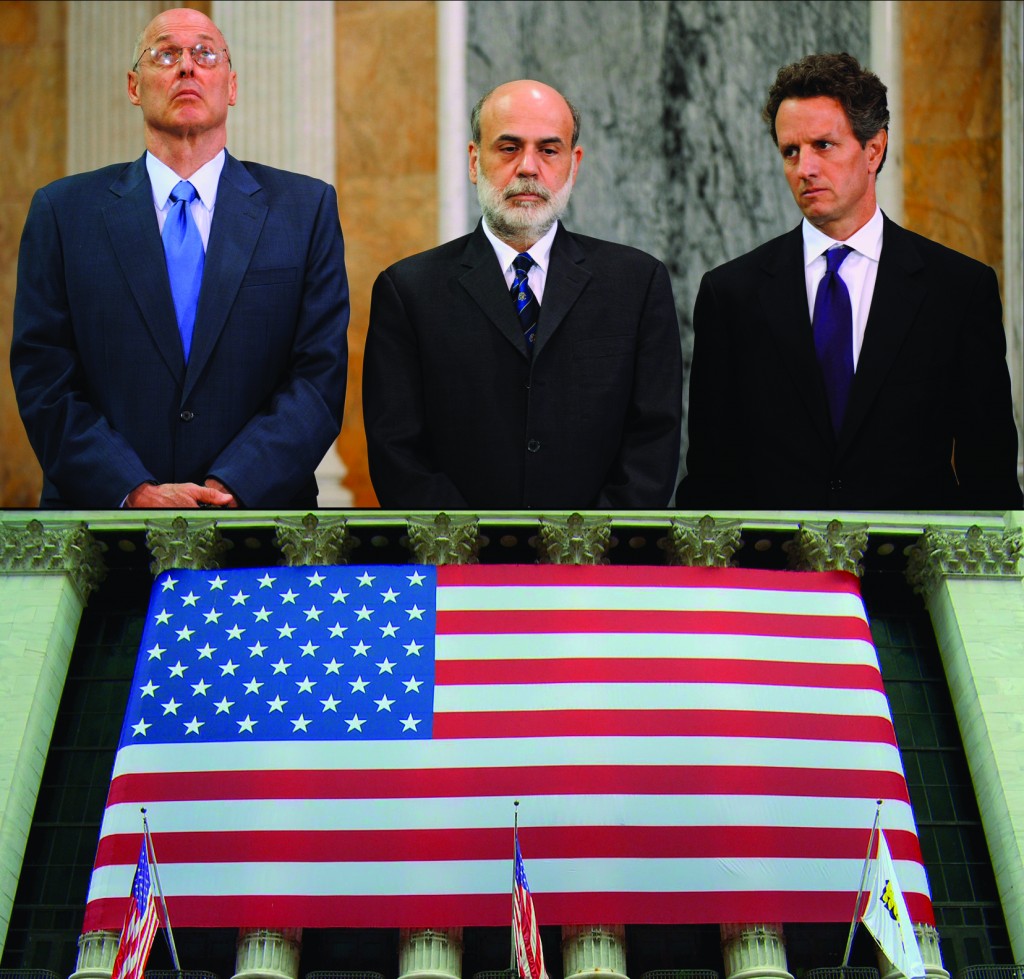
Charles Ferguson follows up his stellar Iraq War documentary No End in Sight with an equally detailed look at the recent global financial crisis that started in 2008 and—despite some reports to the contrary—certainly appears to be ongoing.  Much of the information is familiar, but Ferguson’s great gift as a non-fiction filmmaker is his ability to streamline and synthesize complex events into a clear, yet far from simple narrative.  Inside Job burns with the same anger that fueled Michael Moore’s similarly themed Capitalism: A Love Story, but this film is more focused and thoughtful, an unwise (but fortunately brief) detour into exploring the titillating peccadilloes of Wall Street types—you know, drugs, prostitutes and other vices—notwithstanding.  For me, the most compelling part of the film was Ferguson’s investigation into some of the country’s biggest business schools, where the teaching staff consists of many of the same economists that advanced the theories and policies that led us into our current mess and who still do consulting work for major corporations.  (Interestingly, though they are granted the title of “professor,” few of them are actually part of the faculty, which frees them up to pursue big paychecks in the corporate world in between school semesters.)  The knowledge that these are the people who are training the next generation of stockbrokers, CEOs, and economic theorists—thus ensuring that their harmful policies will continue for at least another generation and beyond—is more frightening that any of the horror films that will be coming out around Halloween.

Inside Job opened in limited release on October 8 and will expand to more cities in the upcoming weeks.

Meek’s Cutoff
Directed by Kelly Reichardt
***1/2

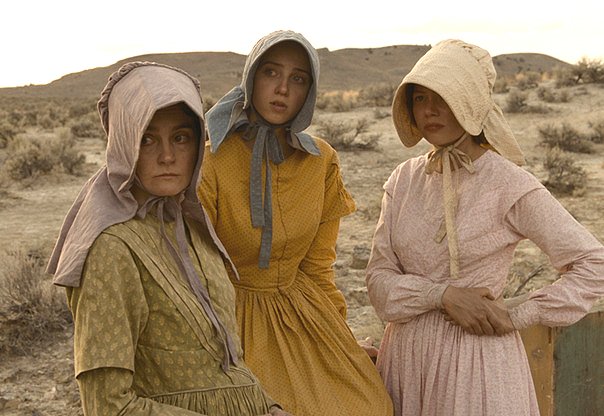
With Meek’s Cutoff, writer/director Kelly Reichardt takes the skills she’s honed over the course of her two-decade career as an independent filmmaker—among them, extensive location shooting, minimalist storytelling and quiet, contemplative pacing—and applies them to what’s easily her biggest production to date both in terms of budget and scope.  Granted, the film is still less than half the cost of the catering budget for the next Transformers movie, but period productions don’t come cheap.  Set in the American West in 1845, Meek’s Cutoff could fatuously, but not entirely inaccurately, be referred to as Oregon Trail: The Movie.  Like that iconic computer game, the film follows a three-family wagon team journeying along the Oregon Trail or, to be more precise, a branch of the Oregon Trail.  The cast of characters includes an older widower (Will Patton) and his new bride (Michelle Williams, re-teaming with Reichardt after her stellar turn in Wendy and Lucy), a young married couple (Zoe Kazan and Paul Dano, who are joined at the hip in real life as well) and a pregnant woman (Shirley Henderson) making the arduous trek with her deeply religious husband (William White) and pre-teen son.  Leading the pack is Stephen Meek (Bruce Greenwood), a brash, quarrelsome guide whose navigation skills aren’t quite as sharp as advertised.  Reichardt and screenwriter Jonathan Raymond drop you right down in the middle of the pioneers’ journey and waste little time with exposition or backstory.  Instead, the characters’ personalities and relationships to each other emerge from their actions or small bits of business—a glance, a terse word, a gesture.  Reichardt does a terrific job keeping the film’s point of view fluid; no one character dominates the proceedings, instead the focus subtly shifts between (and sometimes within) each scene.  The result is an intimate version of a classic Western epic, still incorporating the stunning vistas and thrilling moments we expect from the genre, but never losing sight of the people at the center of the story.  Some clunky dialogue and on-the-nose thematic parallels (the film’s “lost in a desert” scenario has clearly been designed to read as an Iraq War metaphor) mars the viewing experience at times, but overall Meek’s Cutoff is a genuinely exciting next chapter in the evolution of a major directing talent.


Tibet in Song

Directed by Ngawang Choephel
***

The new documentary Tibet in Song begins as a personal travelogue in which director and Tibetan-born musicologist Ngawang Choephel journeys to the country he left as a child in 1968.  At that time, he and his mother fled Tibet in order to escape the damage wrought by the Cultural Revolution in China, which had seized control of its neighbor a decade earlier.  In 1995, the now-grown Choephel returns armed with a video camera and a notebook to record examples of the indigenous folk music he heard in his youth and continued to listen to while in exile.

(more…)

Nine Nation Animation
**1/2

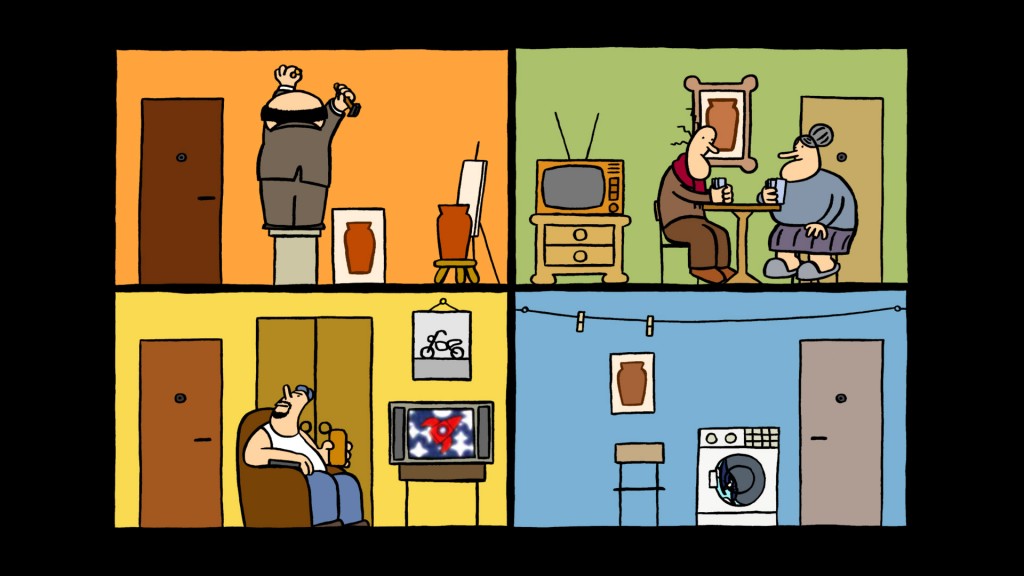
One of my favorite Oscar categories has always been Best Animated Short Film.  I don’t get to see the nominees as often as I’d like to—even now that it’s gotten easier than ever to watch them thanks to the annual screenings organized by the good folks at Magnolia Pictures—but when I do, I’m always struck by the sheer range of narratives and artistic styles on display in these short productions that come from every corner of the globe.

(more…)


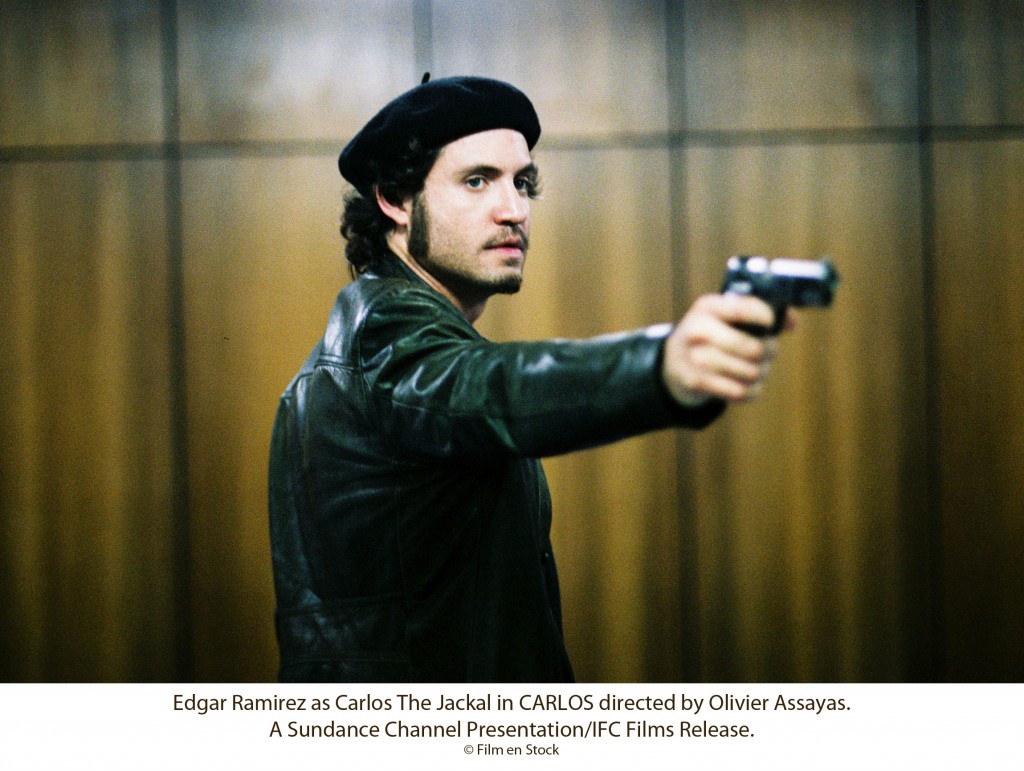
Directed by Olivier Assayas
***1/2

Since its premiere at Cannes last summer, Olivier Assayas’ five-and-a-half hour chronicle of the career of Carlos the Jackal has frequently been compared to Steven Soderbergh’s Che, another lengthy, multi-part film about an iconic political figure who, depending on who you ask, is either a terrorist or a freedom fighter.

(more…)


Directed by Abbas Kiarostami
****

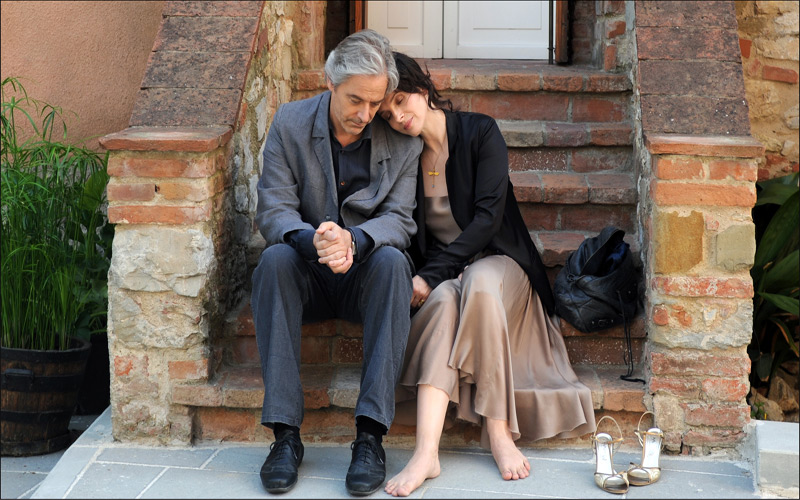
It isn’t often that I immediately want to watch a film again after the credits roll, but that’s how I felt at the conclusion of Iranian director Abbas Kiarostami’s Certified Copy.  This tricky hall-of-mirrors story revolves around a man and a woman (William Shimell and Juliette Binoche) that spend one long day in each other’s company wandering around the Tuscan countryside.  He’s a scholar that specializes in art reproductions, she’s the owner of a small antiques shop and they have supposedly never met before.  Over the course of the day though, their relationship undergoes pronounced shifts and, by the end, they have taken on the appearance and attitude of an actual married couple.  But are they?  Or are they simply a reproduction of the other couples they have encountered during their excursion?  In the end, the movie isn’t concerned with providing a definitive answer, which is as it should be.  The joy of the film emerges from observing the subtle way the nature of their relationship changes over time.  Shimell and Binoche—who deservedly won the Best Actress prize at Cannes—deliver marvelous performances that demonstrate exceptional range, putting them (and us) through the emotional wringer.  Certified Copy is the kind of movie that can be watched again and again because each time you’ll undoubtedly discover something—be it a glance, a bit of body language or a line of dialogue—that makes it into a new film each time.

Directed by Apichatpong Weerasethakul
***

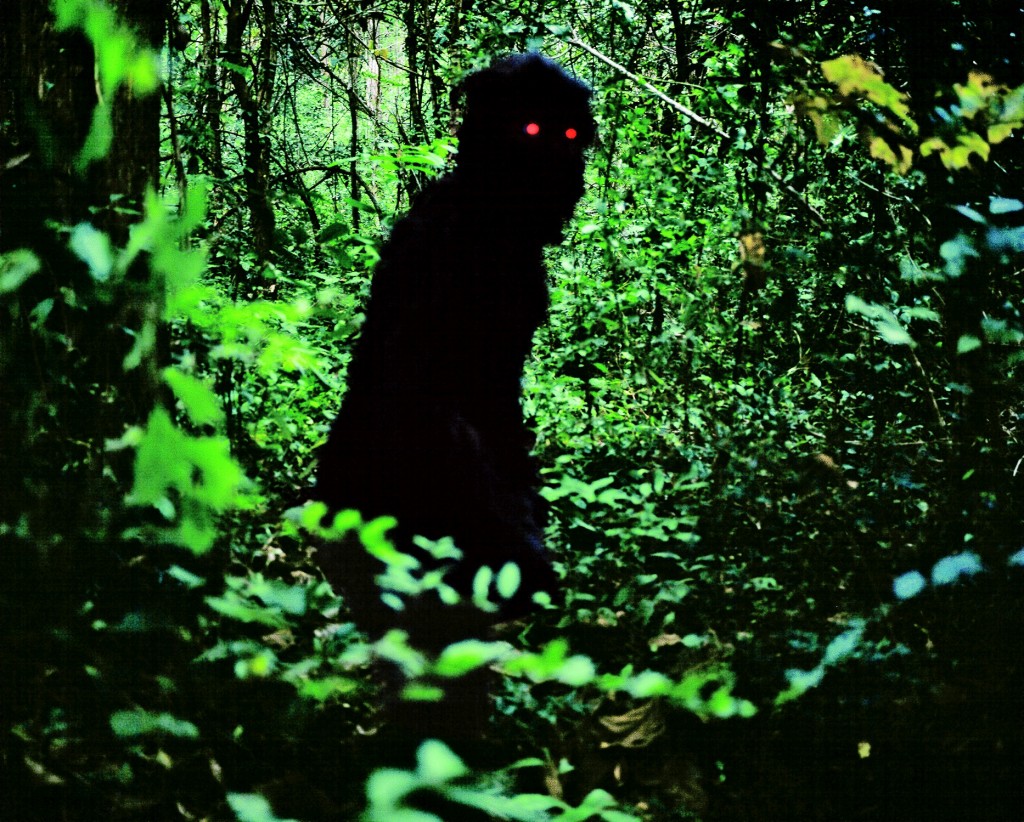
It’s not easy to prepare someone for the experience of watching his or her first Apichatpong Weerasethakul film.  I’ve only seen two of the Thai filmmaker’s movies myself—2004’s’s Tropical Malady and his latest effort, the Cannes-awards winning Uncle Boonmee Who Can Control His Past Lives—and both times I’ve found the viewing experience to be both enthralling and baffling.  Enthralling because his movies are unlike anything else out there right now in the way they mix mysticism and realism and completely depart from a typical narrative structure.  Baffling because they are so removed from current American conventions—both in Hollywood and the independent world—that one spends a lot of the movie (perhaps too much) trying to make logical sense of something that isn’t necessarily supposed to be logical at all.  Personally, my big stumbling block with Weerasethakul has always been the way he directs his performers, most of whom are non-actors.  He doesn’t seem all that interested in tasking them to deliver performances that create fully-rounded characters; in individual scenes, their delivery and facial expressions almost run counter to the material they’ve been given to play.  For example, the title character in Uncle Boonmee is a dying man who is visited by various spirits—including his dead wife and their lost son, who wandered into the jungle and re-emerged as a monkey—as the end approaches and also revisits some of his past lives.  But Boonmee doesn’t express much in the way of surprise or emotion as these mystical events occur; he merely goes on with what little he has left of his life.  At the same time though, the movie’s casual approach to blending fantasy and reality is one of its chief selling points.  This isn’t the aggressive, in-your-face fantasy offered by 3D spectacles like Alice in Wonderland and Avatar—it’s relaxed and almost comically strange.  (The film’s odd comic streak is best exemplified by a did-that-just-happen? sequence where a horny catfish seduces a human princess.)  Perhaps the best way to experience Uncle Boonmee or really any Weerasethakul film is to let his odd vision of the world sweep over your and not sweat the details too much.

« Previous PageNext Page »